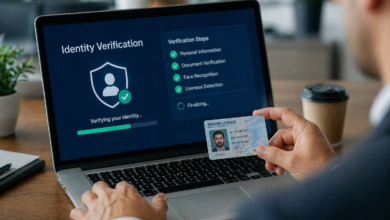
Financial crime is constantly changing as the global transactions and online financial services increase. Global Watchlist Screening is a fundamental compliance requirement by regulatory authorities in various parts of the world including financial institutions and regulated business organizations to deter threats like money laundering, terrorism funding, and fraud. It will enable organizations to match customer data with official sanction lists, criminal databases and politically exposed person (PEP) lists to identify the potential risks prior to the establishment or the continuation of business relationships.
Watchlist screening is stressed by regulators of the world as it is necessary to avoid the appearance of prohibited individuals or entities within the financial system. Companies who fail to vet their clients accordingly can be severely fined, suffer reputational harm and even end up with a criminal liability.
The rationale behind Why Watchlist Screening is a Regulatory Requirement
Regulators anticipate that financial institutions would implement risk-based compliance programs which would consist of customer due diligence and surveillance of transactions. Global Watchlist Screening is important in such frameworks as it allows companies to detect persons that are related to the violation of sanctions, terrorism, and other criminal organizations.
During the process of onboarding, organizations usually screen the candidates and keep on monitoring them throughout the business relationship. This makes sure that in case an individual or an organization is added to a list of sanctions or criminal watchlist, the organization would be able to identify the change and act instantly.
A large number of regulatory regimes require institutions to keep auditable screening records and demonstrate the accuracy of their screening systems and to display their handling of possible matches. Such demands demonstrate the need to have automated and dependable screening solutions.
The major International Rules that assist in watchlist screening
Watchlist screening is highly recommended or even enforced by the global compliance standards. Financial Action Task Force (FATF) offers the most powerful global rules towards fighting money laundering and terrorist funding. Its recommendations mandate the countries to put in place sanctions screening and monitoring systems on financial institutions.
In the US, the Department of the Treasury Office of Foreign Assets Control (OFAC) imposes economic and trade restrictions on persons and groups engaged in criminal activities as well as states. To prevent illegal transactions, the financial institutions are required to screen the customers with the list of OFAC sanctions to verify that they are not engaging in illegal transactions.
The European financial institutions abide by the rules of compliance that are set by the European Union that maintains consolidated lists of sanctions on individuals and entities related to acts of terror, human rights abuse, or geopolitical conflicts.
The security council of the United Nations is also mandated to publish global sanctions lists which member states have to implement. These lists consist of persons and groups who are linked to terrorism or international crime and this is a very important aspect of global watchlist checking programs.
Watchlists of Criminal and Law Enforcement
Although the most frequently screened database is a sanctions list, law enforcement watchlists are also helpful in risk identification. A case in point that keeps being mentioned in the areas of compliance and security is that of the Federal Bureau of Investigation that has in their possession several criminal intelligence databases that the government agencies use.
When organizations are deliberating on the high-tech practice of risk-screening, discussions on FBI Watch list Search capabilities tend to arise. Even though private institutions cannot directly access classified government databases, compliance teams use aggregated sources of intelligence, which include publicly available information on law enforcement.
At times, the media reports regarding an FBI Watch list leakage lead to controversy regarding the safety and transparency of national security databases. Such incidences emphasize that watchlist data is delicate and that effective data protection is necessary when watchlists are being screened by an organization.
See also: Increasing Productivity with Breakthrough Technologies
The Problems of Compliance and the necessity of high-level screening
Implementation of effective watchlist screening system may be difficult despite regulatory requirements. Among the frequent ones is the large rate of false positives due to similarities in the names, which may delay compliance teams and may cause operation inefficiencies.
To cope with this difficulty, a lot of organizations use automated screening technologies where artificial intelligence and sophisticated matching algorithms are applied. Through these systems, the accuracy is enhanced, the workload done by humans is minimized and the institutions are better placed to meet the global regulatory expectations.
With financial crime increasingly becoming sophisticated, regulators are also raising the pressure on the need to constantly monitor as opposed to the periodic checks. This change would require businesses to have a continuous Global Watchlist Screening to establish risks in the entire customer lifecycle.
The Increasing Significance of Watchlist Screening
International rules are a clear indication that screening of watchlists is no longer an option to the regulated business. It is regarded by governments and international organizations as an essential tool of protection against financial crime, terrorism financing and evasion of sanctions.
Organizations that invest in efficient Watchlist Screening systems do not only comply with the regulatory requirements but also reinforce their risk management policy. Early detection of high-risk individuals and their constant observation can help organizations to secure their operations and also facilitate a safer and more transparent financial environment.