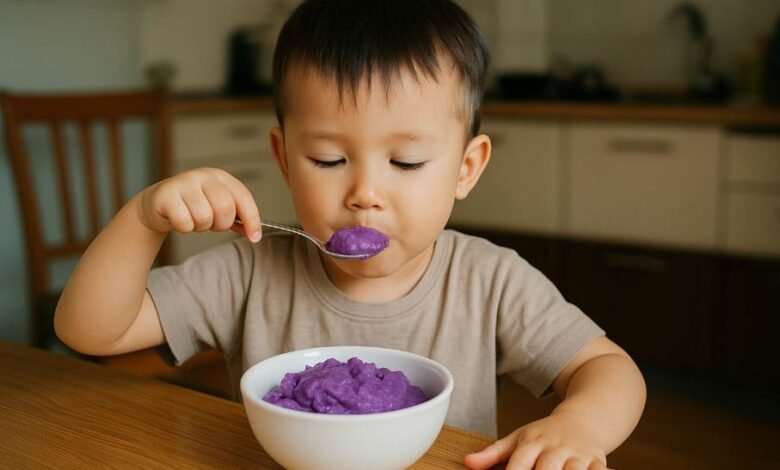
It’s hard not to be intrigued by the bold purple colour and naturally sweet taste of ube. Whether seen in ice creams, pastries or as a warm mash, ube is becoming a staple in kitchens around the globe. But for parents and carers, the question remains: is ube suitable for young children, and if so, from what age? While adults can fully appreciate ube’s unique flavour and vibrant nutrients, introducing it to a child’s diet requires a bit more care. With a rise in interest for natural, plant-based weaning foods, ube offers a compelling choice but only if introduced correctly. Let’s dig into the facts and find out when children can start enjoying ube safely, how it supports their development, and what to watch out for.
Understanding ube and its nutritional value
Ube, known also as purple yam, is a root vegetable native to Southeast Asia, particularly the Philippines. Its vivid purple hue isn’t just for show it’s a natural indicator of the rich antioxidants and phytonutrients contained within. Similar in texture to sweet potato but with a nuttier flavour, ube is packed with nutrients that make it attractive to parents exploring weaning-friendly foods. Among its nutritional highlights are:
- High levels of vitamin C, which supports immunity
- Rich in fibre, aiding digestion
- Natural source of potassium, important for growth
- Antioxidants like anthocyanins, which give ube its vibrant colour
When considering first foods for your child, the simplicity of whole vegetables is often a smart starting point. Ube fits perfectly within that realm, provided it’s prepared properly. One popular form of introducing ube is via ube powder, which allows for easy preparation of smooth purées or mixed-in porridges for little ones. It’s important to know that ube is not the same as purple sweet potato. Although both are purple in appearance, they differ in taste, texture, and nutritional content. Ube has a slightly sweeter, more floral flavour, making it a hit with fussy eaters when mixed into porridge or smoothies.
See also: How Addiction Affects Your Mental Health
When is it safe to introduce ube to babies?
Most healthcare providers and weaning experts agree that solid foods can be introduced around the six-month mark, depending on your child’s development. At this stage, ube can be safely offered in purée form with no added sugars, spices or salts. Why six months? At this point, most babies have:
- Developed neck and head control
- Reduced tongue-thrust reflex (to prevent choking)
- Curiosity towards food
- The ability to sit upright with support
Offering ube too early could increase the risk of choking or digestive upset, so waiting until these developmental cues are met is essential. When starting, go for small amounts think a teaspoon of cooked and mashed ube, pureed to a smooth consistency. Watch for signs of allergies, although ube is considered low-risk compared to other root vegetables. Still, a three-day wait before introducing another new food is a smart approach.
How to prepare ube for toddlers and young children
Preparation is key to ensuring ube is not only safe but also appealing to children. The texture, temperature, and presentation all play a role in whether it becomes a favourite or a flop.
Ube for babies aged 6 to 12 months
At this stage, simplicity reigns supreme. Ube should be thoroughly cooked and blended into a silky purée. You can mix it with breast milk or formula to thin it out. Avoid using any additives. Many parents choose to steam or boil peeled ube and blend it down. Ube powder is another convenient option, allowing for quick mixing with water or baby porridge.
Ube for toddlers aged 1 to 3 years
As chewing ability improves, you can begin serving ube in soft chunks, patties, or pancakes. At this stage, toddlers enjoy variety in textures, so mashed or roasted ube can be a hit. A few child-friendly ways to serve ube:
- steamed ube mash
- ube oatmeal
- ube pancakes
- ube smoothie bowls
- ube muffins (sugar-free)
As always, avoid choking hazards and supervise while eating.
Can children develop allergies or intolerance to ube?
While rare, food allergies can occur with nearly any food. Ube is not considered a common allergen, but introducing it carefully is important, especially if your child has known sensitivities. Typical signs of intolerance or allergic reaction include:
- Skin rashes or hives
- Swelling of lips or tongue
- Diarrhoea or vomiting
- Unusual irritability after eating
If you suspect an adverse reaction, pause consumption and consult a medical professional. It’s worth noting that many children show mild discomfort simply because their digestive systems are still developing. This doesn’t always indicate an allergy it could be the result of too large a portion or pairing ube with other new foods. Introducing ube on its own and in small amounts helps isolate any potential issues. When used in moderation and with care, ube can be a gentle, enjoyable first food.
What are the long-term benefits of including ube in a child’s diet?
Think of ube as a vibrant gateway to healthy eating. Its natural sweetness and colour entice children, while its nutritional profile supports long-term health. Ube is particularly valuable in replacing overly processed snacks with whole food alternatives. Children who develop a taste for natural foods early on are more likely to maintain balanced diets as they grow. Ube can also serve as a helpful ally for children who are picky eaters, as its vivid colour and subtly sweet flavour often appeal to even the most hesitant toddlers. Over time, incorporating ube into meals encourages variety a key pillar of nutritional health. Ube is rich in slow-release carbohydrates, making it ideal for maintaining energy levels throughout the day. Parents often report that once children are familiar with ube in simple meals, they become more adventurous with other vegetables too.
The bottom line on ube and age suitability
There’s no magic number for when ube becomes the perfect food for your child, but six months and beyond is a safe place to start. As with any new ingredient, moderation, preparation, and observation are your best friends. Ube’s natural sweetness, nutrient density, and flexibility in meals make it a fantastic addition to your child’s evolving plate. And who knows? That first taste of purple might just open the door to a whole rainbow of healthy eating. If you’ve already tried ube with your little one, what did they think? Share your tips or favourite recipes you might inspire other parents taking their first steps into this colourful root.